
TL;DR: Effective recovery is more than just taking days off. It’s an active strategy that uses specific tools to help your body repair faster, reduce soreness, and improve performance. By incorporating modern techniques like cryotherapy and mechanical lymphatic massage, you can get better results from your training and support your long-term wellness goals
Is Your Recovery Holding You Back?
Most people who take their health seriously have a plan for their workouts. But far fewer have a plan for their recovery. We often think of recovery as passive–simply resting and waiting for muscle soreness to fade.
But this approach leaves significant results on the table. Active, tool-based recovery is not a luxury; it’s a critical part of any effective fitness or wellness program. It is the process that allows our body to adapt, rebuild, and come back stronger. By being strategic with your recover, you can accelerate progress and build a more resilient physical foundation.
The question isn’t whether you need to recover–it’s whether your recovery is working as hard as you do.
Key points about modern recovery:
-
It’s a proactive strategy. Modern recovery is about using targeted tools to support the body’s natural repair mechanisms, not just waiting for them to work on their own.
It supports workout consistency. By managing muscle soreness and fatigue, a smart recovery plan helps you stick to your training schedule without unscheduled “off days” due to excessive stiffness.
It goes beyond muscle repair. Advanced recovery techniques aid circulation, support cellular function, and help manage the body’s response to physical stress.
It is for everyone. These tools are not just for elite athletes. They are for anyone serious about their physical goals, from starting a new fitness routine to optimizing long-term health.
An Introduction to Modern Recovery Tools
Your body has an incredible capacity to heal and adapt. Modern wellness technologies are designed to support and enhance those natural processes. Each tool works on a different principle to help you manage the effects of physical exertion.
Here are a few foundational techniques:
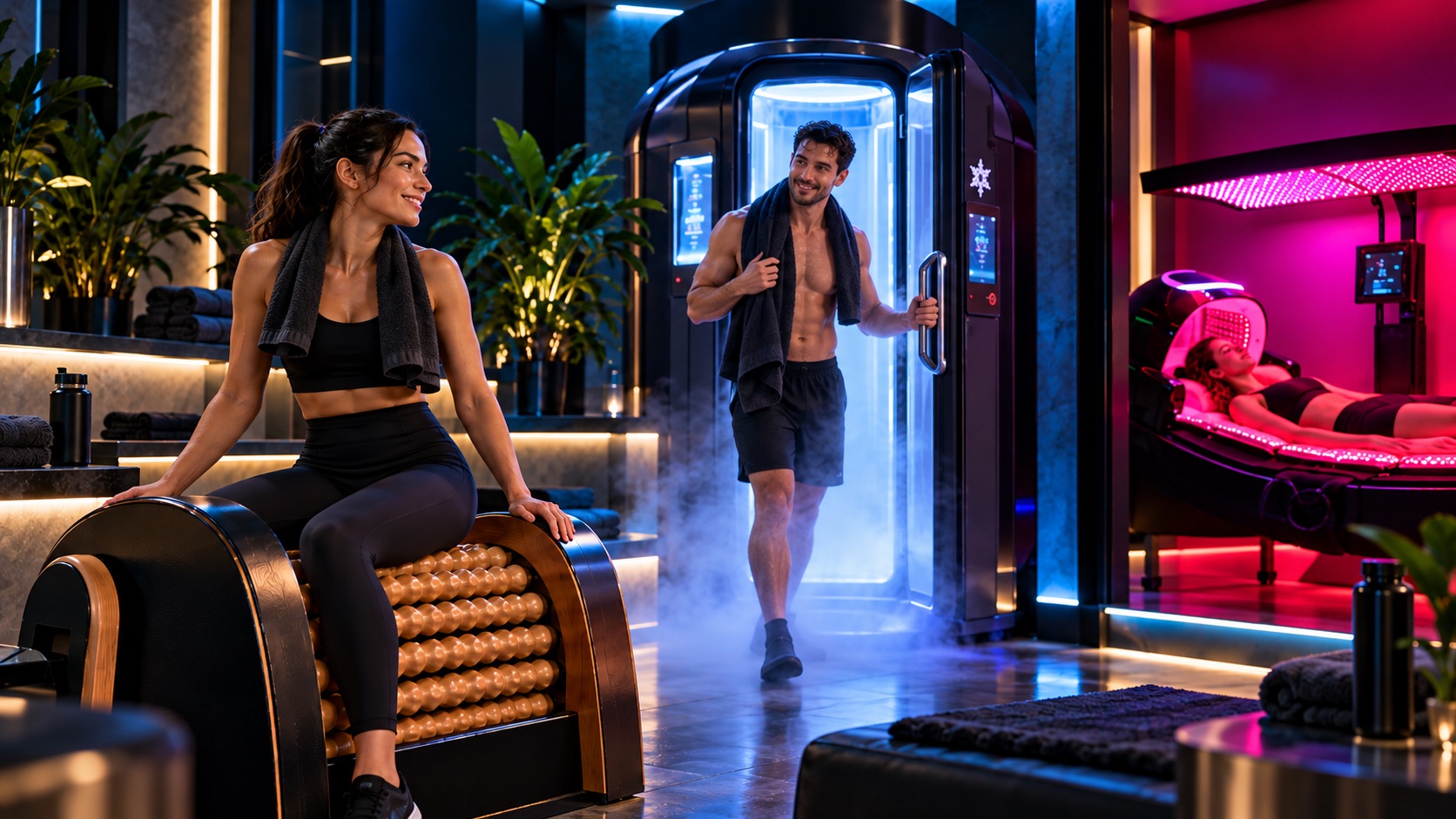
Whole Body Cryotherapy This involves a few minutes in a chamber cooled to sub-zero temperatures. The primary goal of this technique is to support the body’s natural inflammation response and aid circulation as your body rapidly warms back up post-session. This is a popular method for managing post-workout muscle soreness.
RollStar Lymphatic Roller The RollStar uses rotating wooden rollers to perform a deep mechanical massage. This therapy is designed to stimulate the lymphatic system, helping to support the natural removal of metabolic waste and excess fluid from the tissues. Many users find it effective for reducing muscle tension and feelings of leg heaviness after a workout.
Red Light Therapy (Photobiomodulation or “PBM”) This involves exposing the skin to specific wavelengths of red and near-infrared light. This process is designed to support the function of mitochondria, the power centers within your cells. Supporting cellular energy production is foundational to performance and recovery.
Common Recovery Mistakes to Avoid
Knowing what not to do is just as important as knowing what to do.
Thinking “More is Always Better.” Pushing through pain and skipping recovery days is a direct path to burnout or injury. True progress is made when the body is given the proper conditions rebuild.
Being Inconsistent. Using a recovery tool once will not produce lasting effects. Just like training, the benefits of active recovery are cumulative and depend on consistent application.
Using the Wrong Tool for the Goal. Different goals require different tools. A recovery plan should be tailored to your specific activities, whether that’s recovering from a long run, a strength training session, or simply a demanding week.
FAQs About Active Recovery
How long should recovery be? It varies by technology. Cryotherapy sessions are just 3 minutes, while Red Light Therapy or RollStar sessions can be longer. The right duration and frequency depend on your personal goals and training load.
Is modern recovery only for professional athletes? Not at all. While athletes were early adopters, these technologies are for anyone looking to improve how they feel and perform. If you are active, managing physical stress, or focused on long-term vitality, these tools are for you.
What is the difference between and ice bath and Whole Body Cryotherapy? An ice bath uses cold water immersion for 10-15 minutes, which can be uncomfortable. Whole Body Cryotherapy uses cold, dry air for just 3 minutes, a method often reported as being more comfortable while providing an intense temperature stimulus to support recovery.
Build Your Personal Recovery Strategy
A well-designed recovery plan is the key to unlocking consistent progress. But the best approach is one that is built around your body, your activities, and your goals.
The best way to understand how these technologies can support you is to see them for yourself. Our team can guide you through the science and help you build a plan that fits your life.